
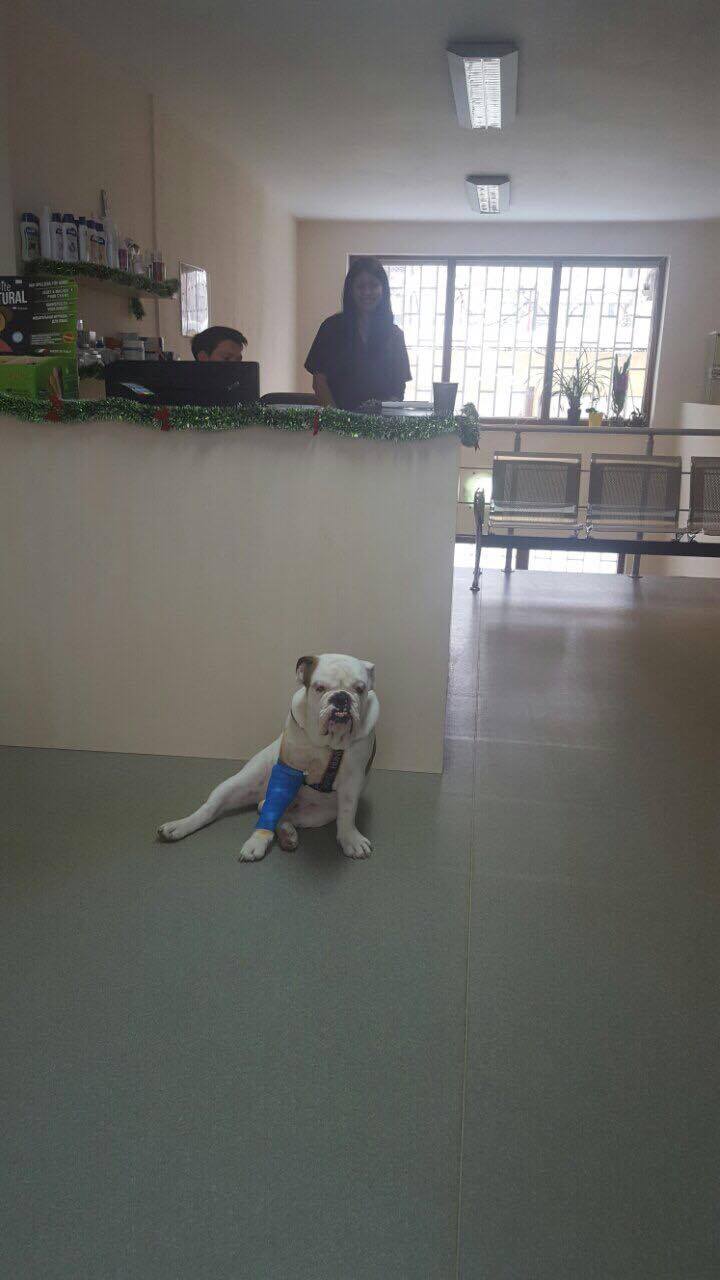
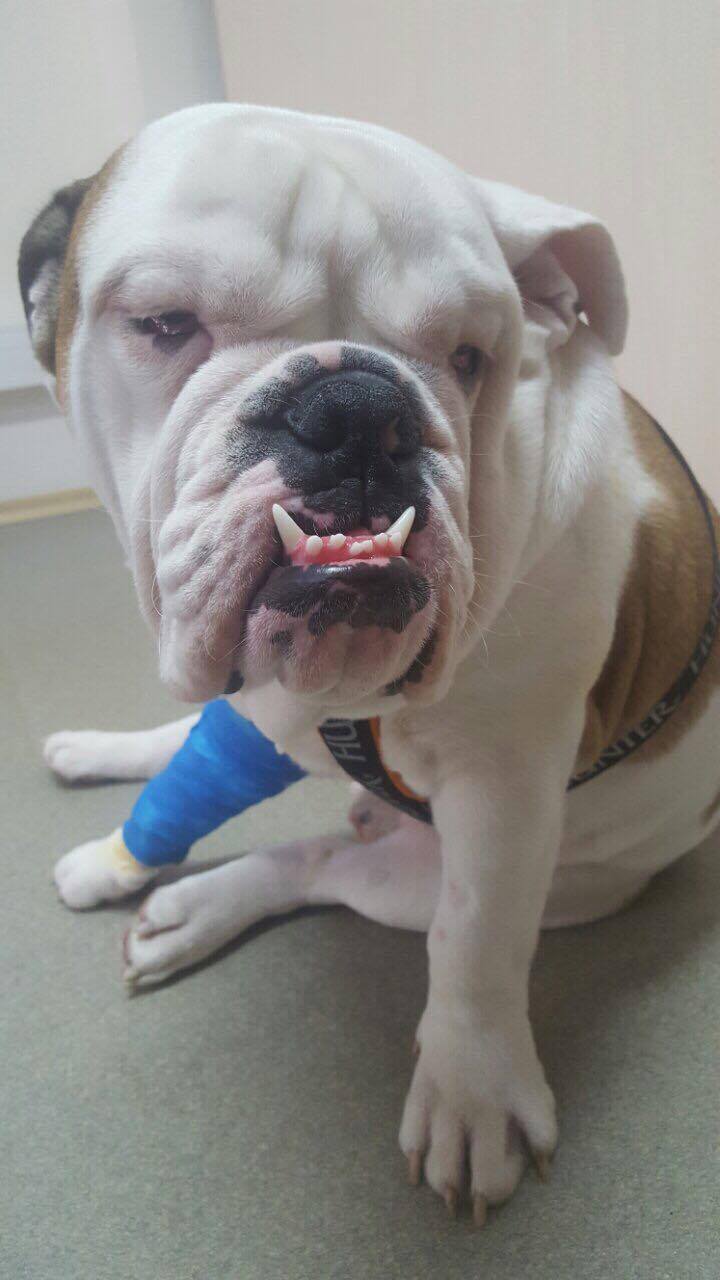
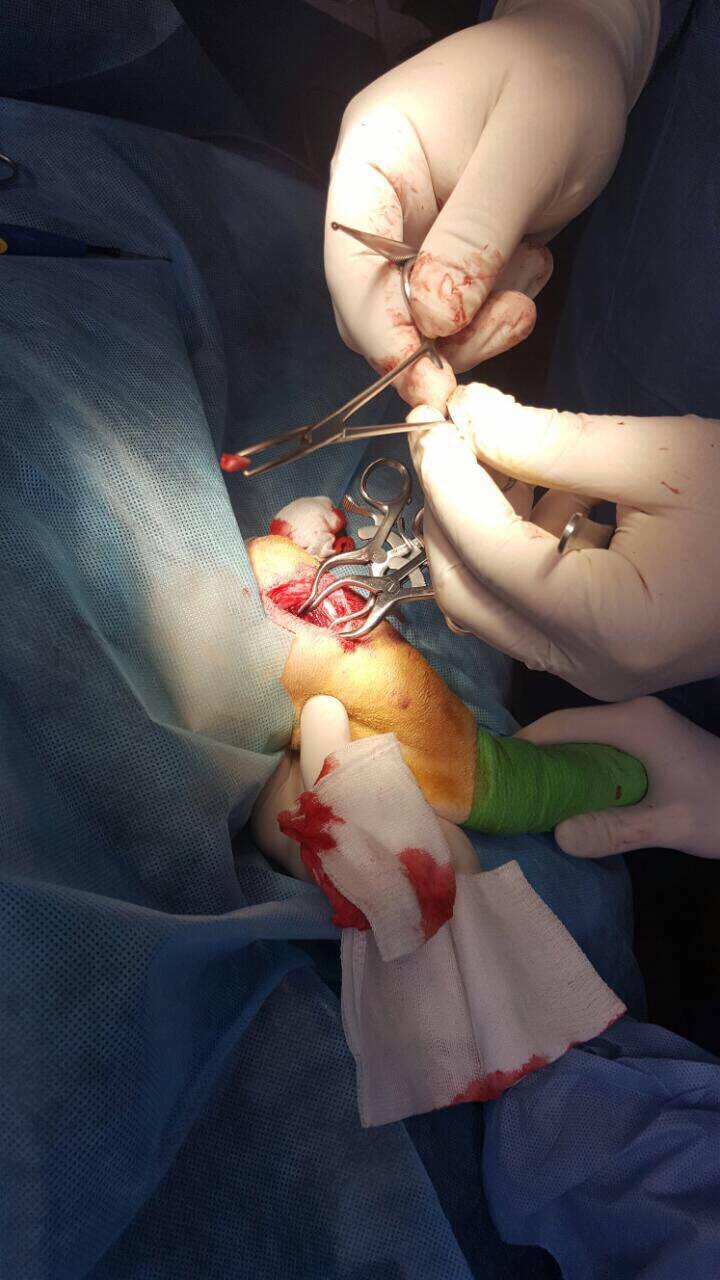
This is Oliver — an 8-month-old English Bulldog with elbow dysplasia. Oliver was presented to us with lameness in the right front limb of about a month’s duration.
Elbow dysplasia is a genetic disease consisting in the abnormal development of the joints of the three bones forming the elbow joint. As a result, the joint surfaces do not fit perfectly and the forces of pressure and traction in the elbow joint are distributed unevenly.
This disease is one of the most common causes of front-limb lameness in young dogs of large breeds: Rottweiler, Labrador, Golden Retriever, German Shepherd, Karakachan Shepherd, Cane Corso and others. The lameness may be persistent or intermittent, but it almost always returns.
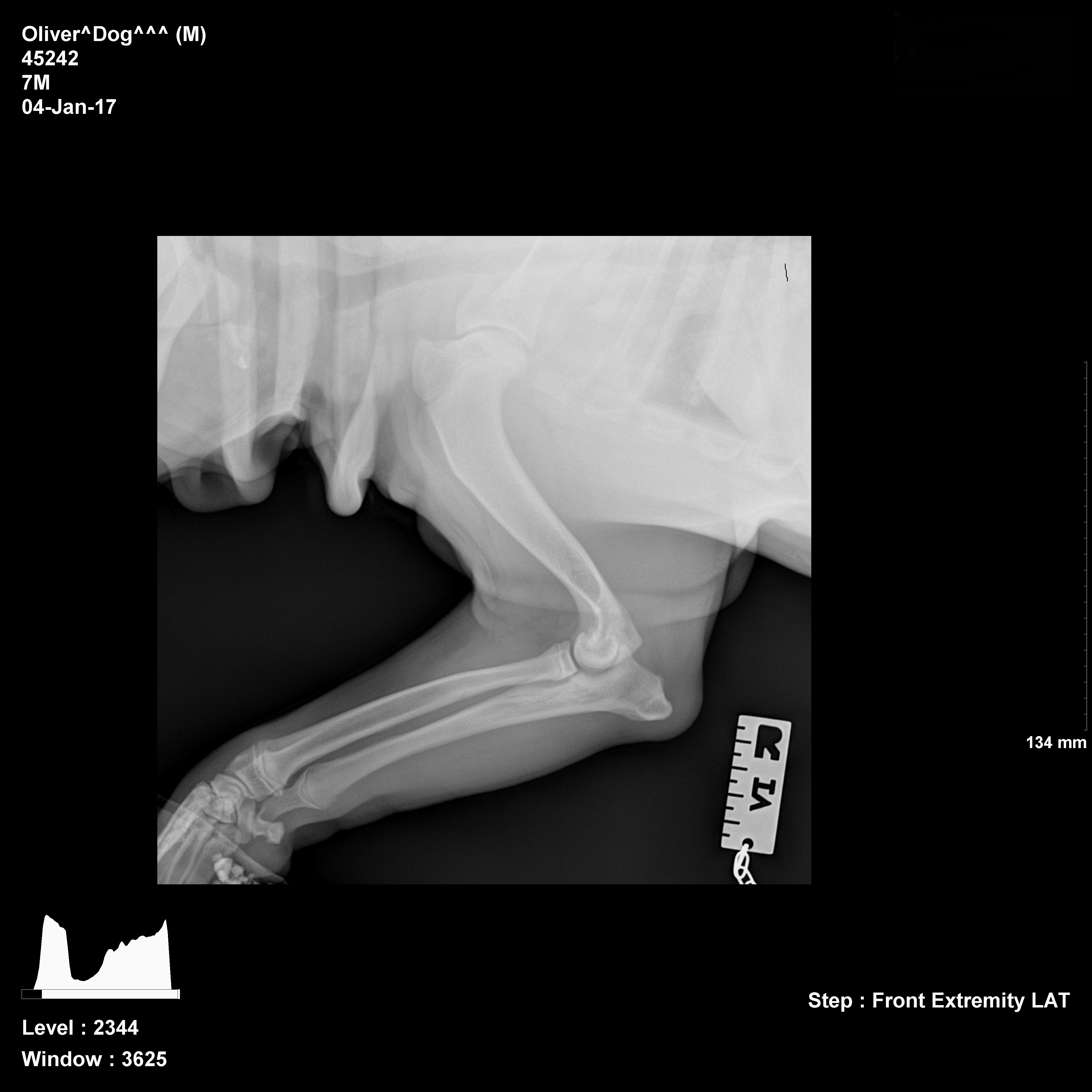
Oliver’s case is one of the most common pathologies of elbow dysplasia — shortening of the radius and mismatch of the joint surfaces, resulting in an intra-articular fracture of the coronoid process of the ulna (FCP).
The diagnosis was made on the basis of X-ray examination and clinical signs.
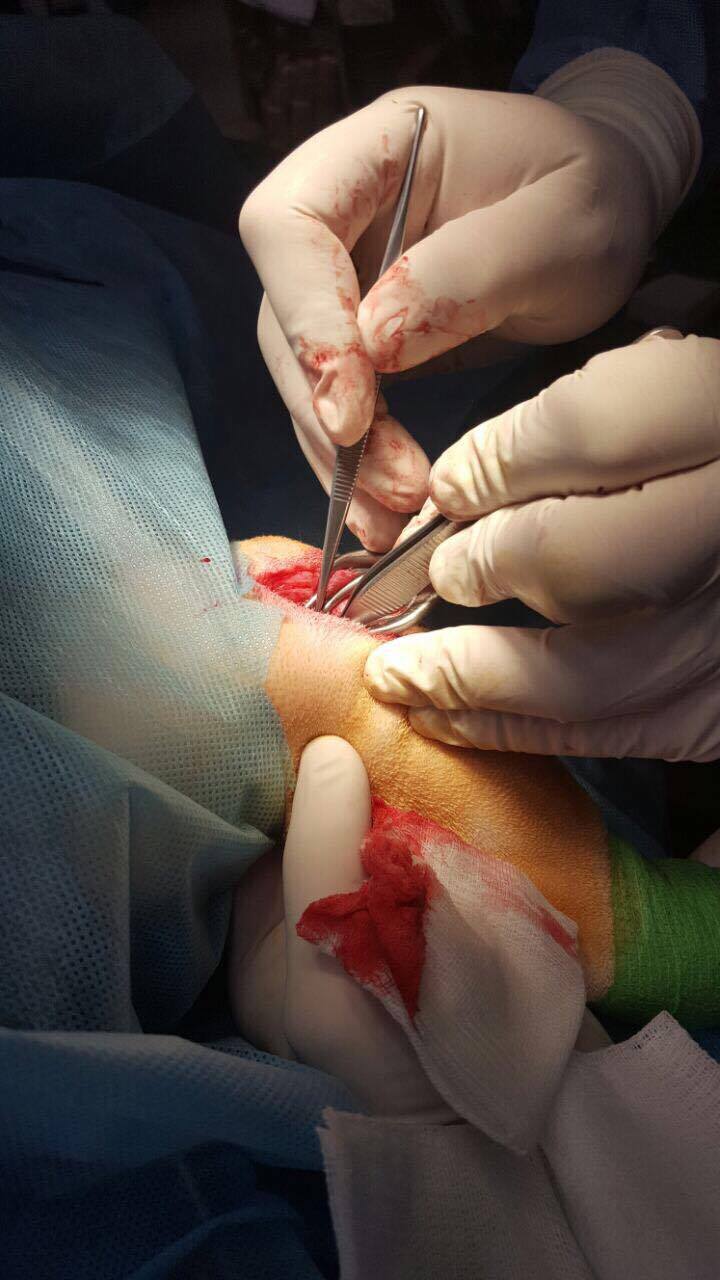
At City Veterinary Clinic an orthopaedic operation was performed, removing the fragmented bone process from the elbow joint plus a proximal ulnar osteotomy (PUO). PUO is a cut through the ulna in a specific direction and at a specific angle that allows the bone to heal in a new, suitable position, ensuring correct movement and joint congruence.
Oliver is due to have surgery on the left leg as well, performed at least a month after the first.