
What is pyometra?
Pyometra is a risky, serious and often life-threatening disease that can lead to septicaemia and endotoxic shock. It is a purulent inflammation of the uterus in which the uterine cavity fills with purulent exudate. It comes in two types: *open pyometra, where the cervix is open and purulent discharge, sometimes mixed with blood, is seen from the vulva; and *closed pyometra, where the cervix is closed and there is no vaginal discharge — the more dangerous variant, because the uterus can rupture once it fills with pus.
The disease occurs most often in middle-aged and older dogs and cats, but can also affect very young animals. Symptoms start developing 1–2 months after a heat, or after the use of heat-suppression medication.
Causes: hormonal and bacterial factors, and the use of heat-suppression products.
Clinical symptoms: increased thirst, frequent urination, vomiting, lethargy, reduced appetite, purulent vaginal discharge, rarely a raised temperature.
Diagnostics: abdominal ultrasound remains the most accurate method, supplemented by blood tests.
Treatment: the safest approach is surgical removal of the uterus and ovaries, as in spaying. Medical treatment has a low success rate and pyometra often recurs.
Prevention: above all, spaying before the first heat, and avoiding heat-suppression medication.
For more information about your pet you can get a free consultation on 0878 455 323 or at City Veterinary Clinic, 46 Nishava St.
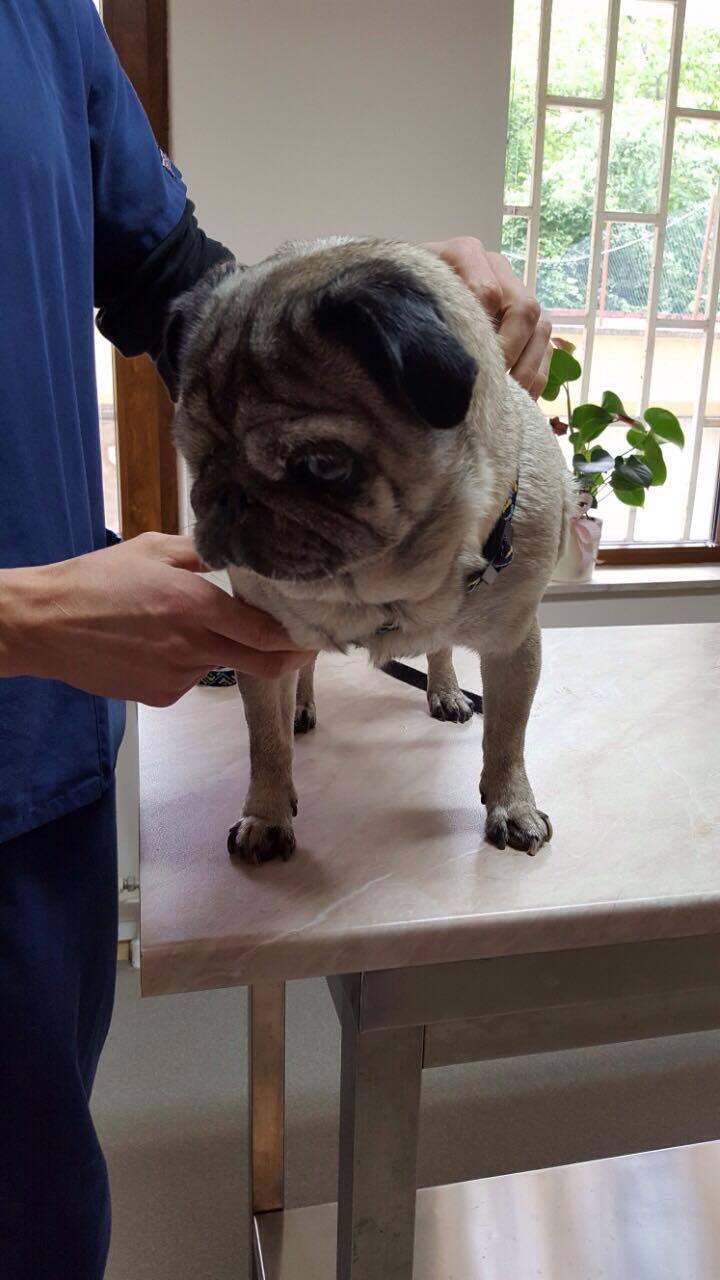
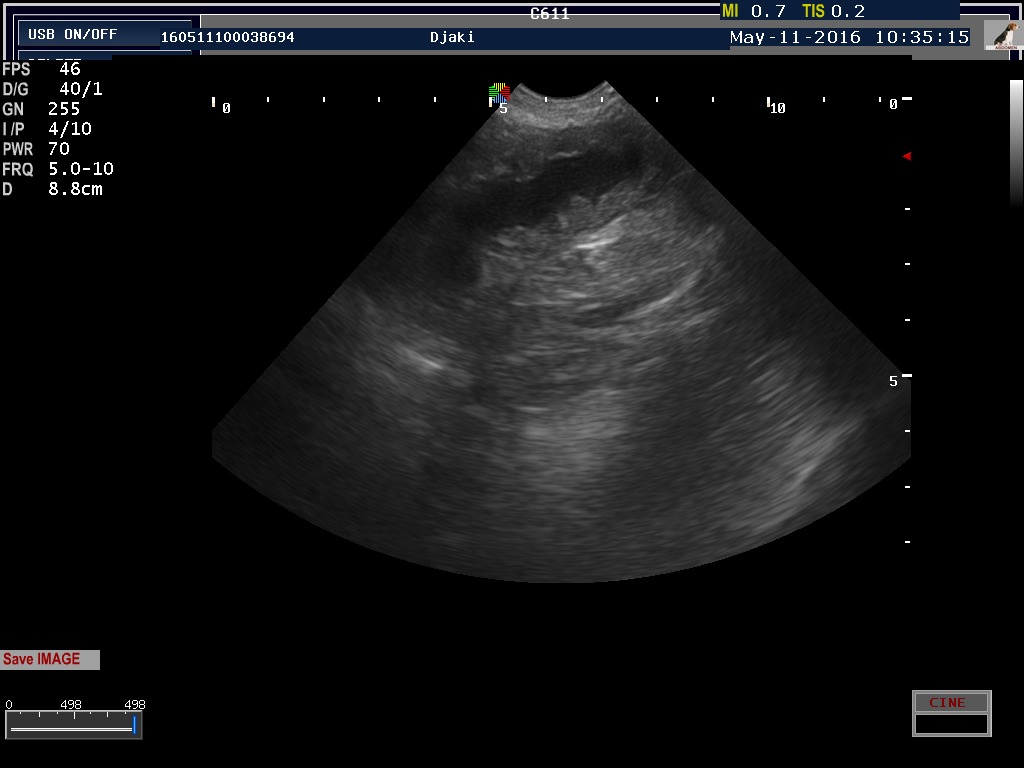 A case of pyometra in Koni the pug.
Koni is a 9-year-old female pug, not spayed. For about two weeks she had discharge from the vulva, was eating less, was lethargic, drinking a lot of water and urinating frequently. At the examination at City Veterinary Clinic, ultrasound of the uterus showed fluid in the uterine cavity, thickened walls and a greatly enlarged organ. Our blood tests — a complete blood count — showed a strongly elevated white cell count of 38,000 against a norm of 17,000; the biochemistry deviations were smaller, with slightly elevated liver enzymes (AST, ALT, alkaline phosphatase), urea and creatinine. The diagnosis was pyometra. Because of the abnormal blood results and her deteriorating condition, treatment had to start immediately: hospitalisation in the City Veterinary Clinic inpatient ward with fluid therapy against dehydration, antibiotics, anti-emetics and anti-inflammatories. 48 hours after Koni’s condition was stabilised, the surgical treatment of the pyometra was undertaken — removal of the uterus and ovaries. Treatment continued at home with oral antibiotics. Thanks to the timely intervention of Dr Malinova and Dr Tsokev, Koni is now completely healthy and as lively as before.